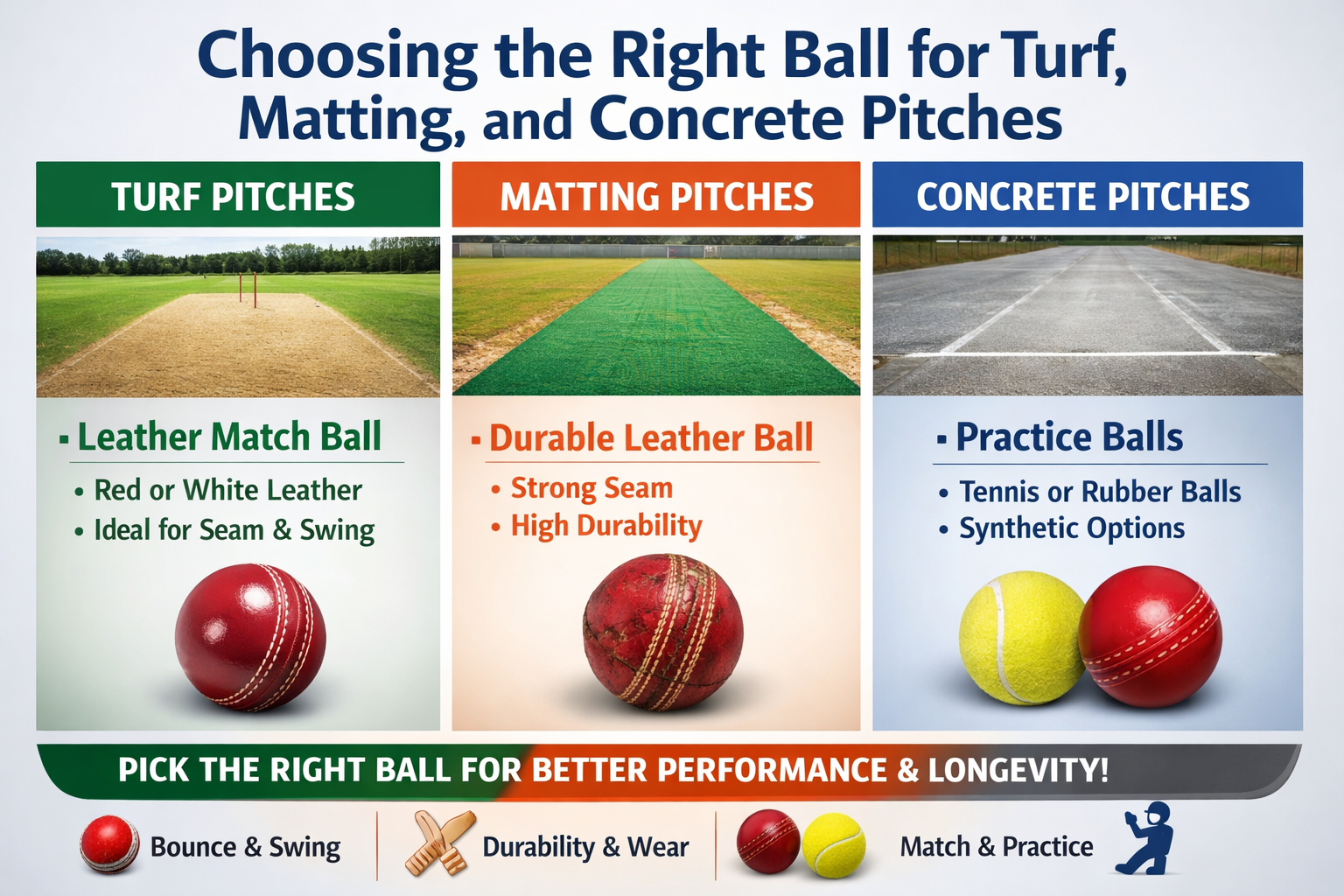
Choosing the Right Ball for Turf, Matting, and Concrete Pitches
Cricket in the United States is growing rapidly, with matches being played on a variety of surfaces—from professional turf grounds to matting wickets and even concrete practice pitches. Each surface behaves differently, which means selecting the right cricket ball is essential for performance, safety, and durability.
Understanding how pitch surfaces affect bounce, swing, and ball wear can help players and clubs choose the best option for practice and matches.
Understanding Different Cricket Pitch Surfaces
Before choosing a ball, it’s important to understand how the surface impacts gameplay.
1. Turf Pitches
Turf wickets are the traditional surface used in professional cricket. They consist of natural grass and prepared soil, offering realistic bounce and movement.
How the pitch behaves
-
Provides natural seam movement for bowlers
-
Encourages swing in the air when the ball is new
-
Bounce varies depending on pitch preparation and moisture
Best ball choice
A high-quality leather cricket ball is ideal for turf wickets because it maintains seam shape and performs well on natural grass surfaces.
Recommended ball type
-
Red leather balls for longer-format matches
-
White balls for limited-overs or night matches
-
Four-piece construction balls for durability
Turf pitches allow the ball to behave as intended, making them the preferred surface for competitive leagues in the USA.
2. Matting Pitches
Matting wickets are common in club and community cricket across the U.S. They use synthetic or coconut-fiber mats laid over a hard surface like soil or concrete.
How the pitch behaves
-
Produces extra bounce compared to turf
-
Can generate sharp seam movement
-
Causes faster wear on softer balls
Best ball choice
A durable leather cricket ball with a strong seam works best on matting surfaces.
Recommended ball type
-
Two-piece or four-piece leather balls
-
Practice leather balls designed for higher durability
Because matting surfaces can be abrasive, using a slightly more durable ball helps maintain shape and performance.
3. Concrete Pitches
Concrete pitches are mostly used for practice sessions and casual cricket. They are typically covered with paint, artificial turf, or rubber mats.
How the pitch behaves
-
Produces very high bounce
-
Hard surface increases ball wear quickly
-
Can damage premium leather balls
Best ball choice
For concrete wickets, it's better to use practice balls instead of expensive match balls.
Recommended ball type
-
Tennis cricket balls
-
Rubber cricket balls
-
Synthetic practice balls
These options protect players’ gear and reduce the risk of damaging costly equipment.
Key Factors When Choosing a Cricket Ball
Regardless of the pitch surface, a few important factors should guide your choice.
Durability
Hard surfaces like matting and concrete can wear out balls faster. Choose stronger balls for practice-heavy environments.
Seam Quality
A pronounced seam helps bowlers generate swing and seam movement, especially on turf and matting wickets.
Match vs Practice
-
Match balls: premium leather balls used on turf pitches
-
Practice balls: synthetic or training balls used for nets and concrete surfaces
Weather Conditions
In many parts of the United States, climate conditions vary widely. Dry conditions can make pitches harder and increase ball wear, so selecting durable balls becomes even more important.
Why the Right Ball Matters
Using the correct ball for each pitch type improves both performance and longevity. It also ensures players experience realistic match conditions during practice.
The right ball can help:
-
Bowlers generate better swing and seam movement
-
Batters develop proper shot timing
-
Teams avoid unnecessary equipment costs
For clubs, schools, and recreational leagues in the USA, matching the ball to the playing surface is a simple way to improve overall game quality.
Final Thoughts
As cricket continues to expand across the United States, matches are played on many different surfaces. Whether you're competing on a professional turf ground, practicing on a matting wicket, or training on a concrete pitch, choosing the right ball makes a big difference.
By selecting the appropriate ball for each surface, players can enjoy better performance, longer-lasting equipment, and a more authentic cricket experience.