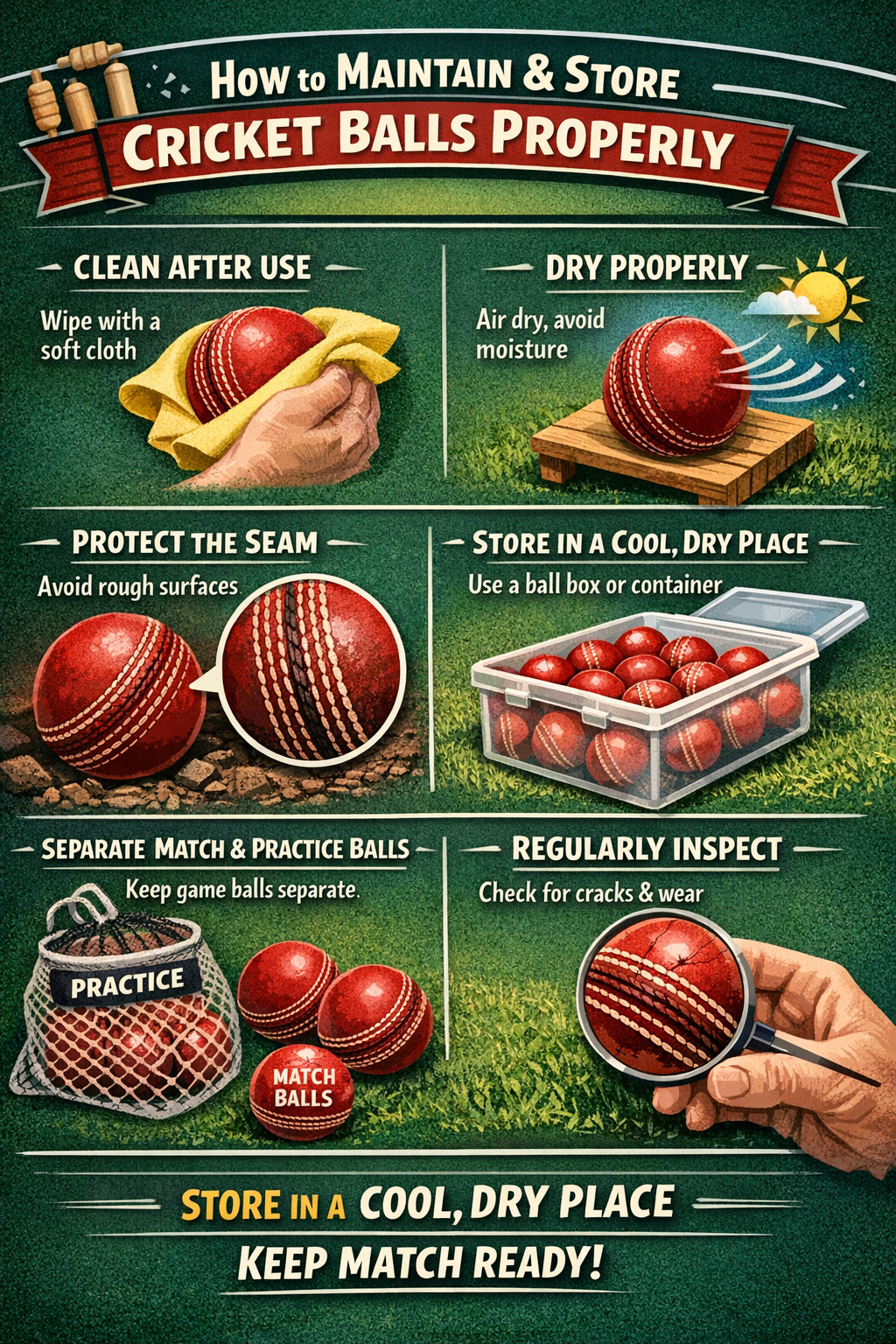
How to Maintain and Store Cricket Balls Properly
Cricket balls are one of the most important pieces of equipment in the game. Whether you’re playing league matches, club cricket, or practicing in the nets, the condition of your ball directly affects swing, seam movement, bounce, and overall performance. Brands like Kookaburra, SG, and Dukes manufacture high-quality cricket balls, but even the best ball needs proper care and storage to maintain its performance.
For cricket players and clubs across the USA, understanding how to maintain and store cricket balls properly can help extend their lifespan and improve match quality.
Why Proper Cricket Ball Maintenance Matters
A well-maintained cricket ball performs better throughout the game. Proper care helps:
-
Preserve the leather surface
-
Maintain the seam for swing and spin
-
Prevent cracking and excessive wear
-
Extend the usable life of the ball
In competitive cricket, even small differences in ball condition can influence how bowlers swing the ball or how batters judge bounce and pace.
1. Clean the Cricket Ball After Every Game
After matches or practice sessions, cricket balls often collect dirt, grass stains, and moisture.
How to clean a cricket ball:
-
Use a soft dry cloth to wipe off dirt and dust.
-
Avoid soaking the ball in water.
-
If necessary, slightly dampen a cloth to remove stubborn dirt.
Cleaning the ball helps maintain the leather surface and keeps it in good condition for future matches.
2. Dry the Ball Properly
Moisture is one of the biggest enemies of cricket balls.
Wet conditions can damage the leather, weaken the seam, and reduce the ball’s shape.
Best practices:
-
Allow the ball to air dry naturally.
-
Keep it away from direct sunlight or heaters.
-
Never store a damp cricket ball in a closed bag.
Proper drying prevents the leather from cracking and helps the ball keep its structure.
3. Protect the Seam
The seam is critical for bowlers who rely on swing and seam movement.
If the seam gets damaged, the ball becomes less effective.
Tips to protect the seam:
-
Avoid hitting the ball repeatedly against rough surfaces.
-
Use practice balls for nets instead of match balls.
-
Store balls in a way that prevents pressure on the seam.
Maintaining the seam ensures consistent bowling performance.
4. Store Cricket Balls in a Cool, Dry Place
Storage conditions greatly affect the lifespan of cricket balls.
Ideal storage conditions:
-
Room temperature environment
-
Low humidity
-
Away from direct sunlight
Avoid storing balls in garages, car trunks, or damp areas where moisture can damage the leather.
5. Use a Cricket Ball Box or Storage Container
Proper storage containers help maintain the shape of the ball.
Many clubs use:
-
Ball boxes
-
Equipment storage cases
-
Cricket kit bags with protective compartments
Using proper containers prevents the ball from being compressed or damaged by other gear.
6. Separate Match Balls and Practice Balls
Match balls should be handled differently than training balls.
Best practice:
-
Keep match balls reserved for games only
-
Use older balls for net practice
This helps maintain the performance and durability of match-quality balls.
7. Inspect the Ball Regularly
Regular inspection helps identify damage early.
Check for:
-
Cracks in the leather
-
Loose stitching
-
Flattened areas
-
Excessive wear on one side
If the ball shows major damage, it may be time to replace it.
8. Avoid Excessive Use on Hard Surfaces
Playing on concrete, asphalt, or extremely rough pitches can damage cricket balls quickly.
Whenever possible:
-
Use grass or turf wickets for matches
-
Use training balls for hard surfaces
This helps preserve high-quality leather balls for longer.
Final Thoughts
Properly maintaining and storing cricket balls is essential for preserving their performance and durability. By cleaning the ball, protecting the seam, keeping it dry, and storing it correctly, players and clubs can significantly extend the lifespan of their equipment.
For cricket players across the USA, taking a few simple steps after every game can ensure that your cricket balls remain match-ready and perform exactly the way they should.
Taking care of your cricket gear doesn’t just save money—it also helps maintain the quality and spirit of the game.