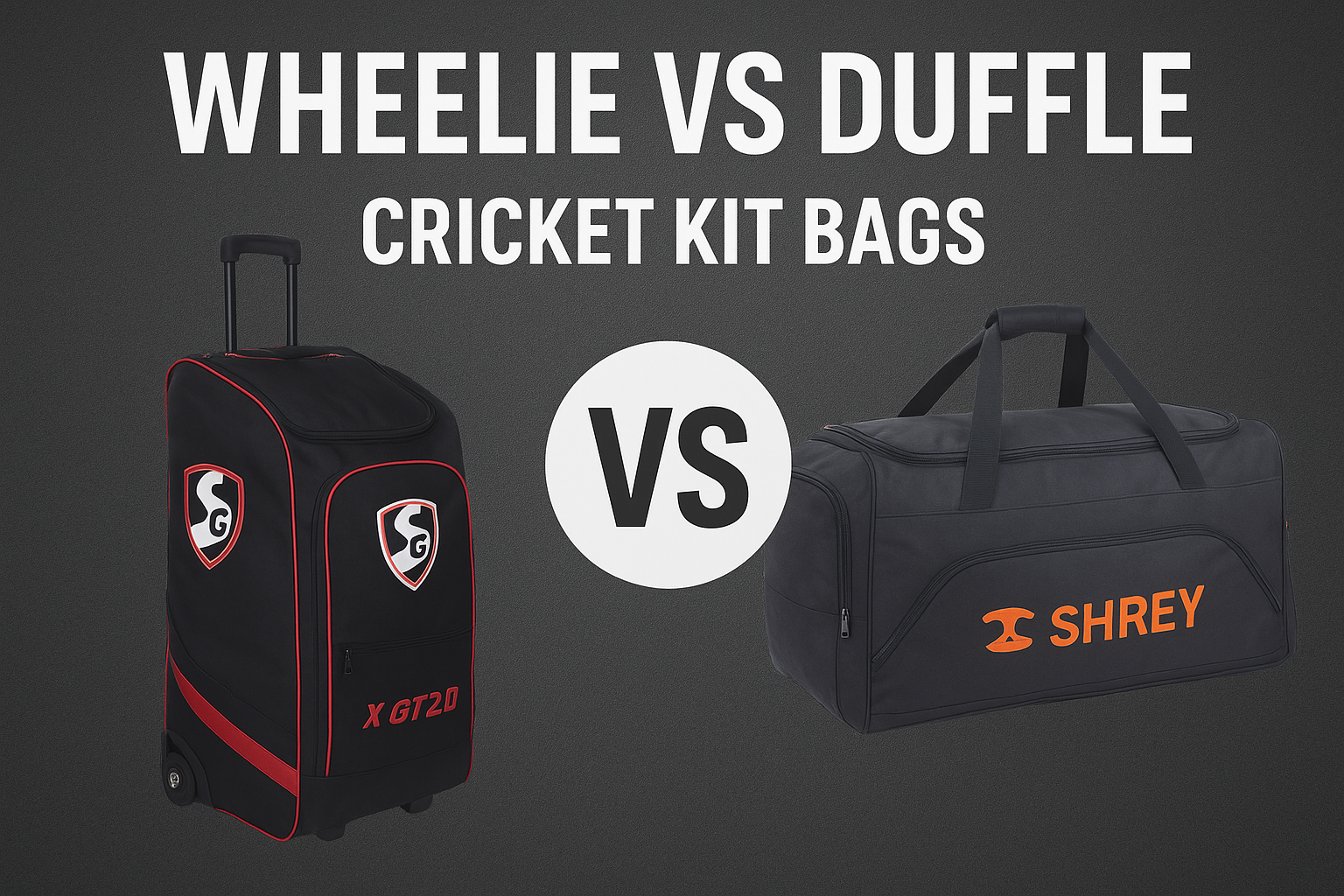
Before we decide which is “better,” it helps to understand how the two bag types differ when it comes to cricket gear.
Wheelie Cricket Kit Bags
-
Built with wheels + a pull/trolley handle, making them easy to roll instead of carry.
-
Typically larger capacity — designed to carry a full kit: bats, pads, helmet, shoes, gloves, clothes, maybe even extras.
-
Often have multiple compartments (bat compartments, shoe pockets, space for protective gear, accessories).
-
With wheels, they make transport over flat surfaces or long distances easier, less physical strain on shoulders/back.
-
Generally preferred when you carry a full match-day kit or multiple bats/gears, or when traveling to matches frequently.
But wheelie bags have drawbacks: they are bulkier, heavier when empty, may be harder to store or fit into small cars/lockers, and their wheels aren’t ideal on rough or uneven ground.
Duffle Cricket Kit Bags
-
Soft-sided bags without wheels — you carry them over your shoulder or as a traditional carry bag.
-
Usually lighter and more compact, easier to carry when you don’t have a full kit.
-
More practical for short distances, practice nets, gym sessions or light gear — when you carry fewer items (like gloves, one bat, shoes, maybe some clothes).
-
Easier to store and handle in tight spaces (cars, changing rooms, small lockers), and usually more affordable than large wheelie bags.
But duffle bags have limited space and less structured organization. If you try to overload them (full kit + extra gear) they can strain your shoulders/back — and may not be ideal for full match-day gear or travel.
Which Bag Type Works Best — Based on Use Cases
Here’s a quick guide to which bag works best depending on how and where you play:
| Use Case / Player Profile | Recommended Bag Type |
|---|---|
| Light training sessions, short commute/walk to nets, minimal gear (bat, gloves, shoes) | Duffle bag — easy to carry, compact, affordable |
| Club-level or amateur matches, maybe 1 bat + basic gear, moderate travel | Duffle or small wheelie — if bag is light; otherwise wheelie if more gear needed |
| Full match kit: pads, helmet, shoes, clothing — multiple items | Wheelie bag — ample space and organized compartments |
| Frequent travel to tournaments, long distances, need comfort + convenience | Wheelie bag — reduces load on body and gives organized storage |
| Tight car/trunk space, small locker room, or minimal storage at home | Duffle bag — easier to store and handle |
In short: duffle bags = lightweight & flexible, wheelie bags = heavy-duty & organized.
Example Bags: Wheelie vs Duffle (And Hybrid)
If you’re shopping, here are some representative options:
-
SG X GT 2.0 Duffle Wheelie Cricket Kit Bag — a hybrid-style bag that gives you the best of both worlds (wheels + duffle-style flexibility). Good if you sometimes walk to the ground but at other times travel by car/train.
-
Shrey Meta Duffle Wheelie Cricket Kit Bag — another versatile choice for those who want ample storage, organized compartments, and easy mobility when fully loaded.
Using a hybrid bag like these can eliminate much of the “either/or” dilemma — you get wheels when you need them, and portability when you don’t.
My Verdict: There’s No Absolute “Better” — Choose Based on Your Needs
If I were you and playing in the USA (or traveling between venues), here’s what I’d choose:
-
For practice sessions, quick nets, or training with minimal gear → go for a duffle bag (compact, easy to carry).
-
For match-days, full kit, traveling to games/tournaments → a wheelie bag is generally undisputed — easier on your body, better organised, and less hassle.
-
If often switching between light gear & full kit → consider a hybrid (wheelie + duffle) bag for flexibility and convenience.
In modern cricket gear design, many players are shifting to wheelie or hybrid bags because of convenience, but duffles remain relevant — especially for shorter trips, minimal gear, or storage-constrained situations.