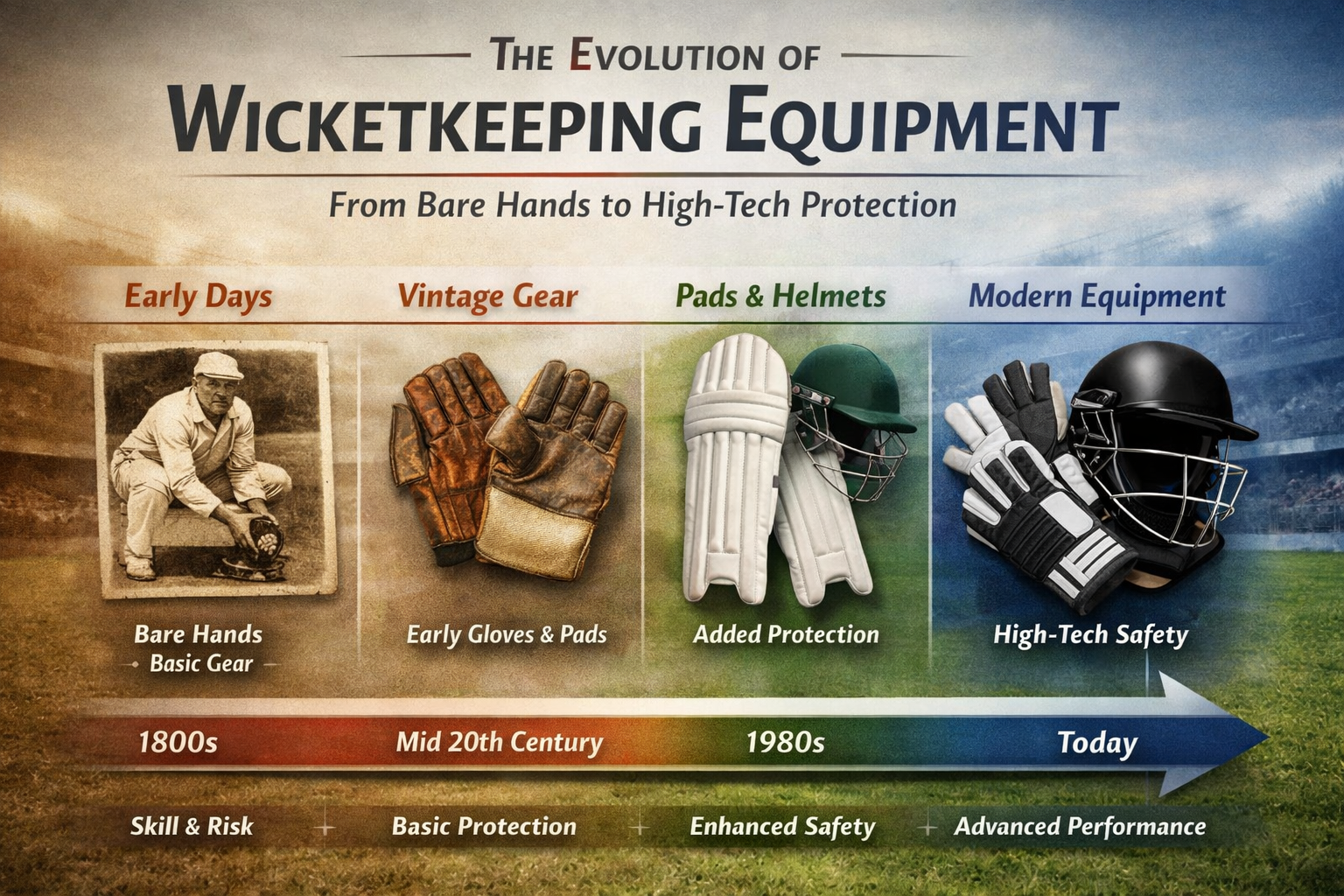
Wicketkeeping is one of the most demanding roles in cricket. Positioned closest to the batter, wicketkeepers need lightning-fast reflexes, sharp footwork, and reliable protection. Over the decades, wicketkeeping equipment has evolved dramatically—transforming from minimal gear into highly engineered, performance-driven equipment. As cricket continues to grow across the USA, understanding this evolution helps players choose the right gear for today’s game.
Early Days: Skill Over Safety
In the early years of cricket, wicketkeepers relied mostly on skill rather than equipment. Gloves were thin or non-existent, pads were optional, and helmets were unheard of. Keepers stood further back from the stumps, especially to fast bowlers, reducing injury risk but limiting quick stumpings.
While this era showcased raw talent, finger injuries and hand fractures were common—something modern players can hardly imagine.
Introduction of Wicketkeeping Gloves
The first major shift came with the introduction of specialized wicketkeeping gloves in the late 19th and early 20th centuries. These gloves featured:
-
Webbing between thumb and index finger
-
Light padding for basic protection
-
Improved grip for catching
This innovation allowed wicketkeepers to stand closer to the stumps, increasing their impact on the game.
Pads Become Essential
Initially adapted from batting pads, wicketkeeping pads evolved to suit lateral movement. Modern wicketkeeping pads are:
-
Lighter and slimmer than batting pads
-
Designed for quick side-to-side motion
-
Equipped with knee rolls and cushioned inserts
For USA club cricketers playing on turf, matting, or artificial wickets, lightweight pads are especially valuable for long match days.
Helmets: A Game-Changing Safety Upgrade
As bowling speeds increased, especially in limited-overs cricket, the need for head protection became obvious. Wicketkeeping helmets emerged to protect against:
-
Inside edges
-
Deflections off the bat
-
Unexpected bounce
Today’s helmets feature steel or titanium grills, adjustable padding, and international safety certifications—making them essential for wicketkeepers at all levels, including youth cricket in the USA.
Modern Innovations in Wicketkeeping Gear
Today’s wicketkeeping equipment blends safety, comfort, and performance through advanced technology:
Wicketkeeping Gloves
-
High-density foam padding
-
Rubberized palms for superior grip
-
Finger protection inserts to prevent fractures
Inner Gloves
-
Sweat absorption
-
Extra finger cushioning
-
Improved hygiene and comfort
Lightweight Materials
-
Better ventilation
-
Reduced fatigue
-
Enhanced agility for T20 and league cricket
These upgrades are especially beneficial for American cricketers balancing cricket with work, school, and travel.
The Influence of Limited-Overs & T20 Cricket
The rise of T20 cricket has reshaped wicketkeeping equipment. Faster games demand:
-
Lighter gloves for quicker reactions
-
Slimmer pads for explosive movement
-
Flexible helmets for comfort during long spells
With T20 leagues expanding across the USA, modern wicketkeeping gear has become a necessity rather than a luxury.
What This Means for USA Cricketers
As cricket infrastructure grows in the United States, players now have access to world-class wicketkeeping equipment previously seen only at elite levels. Whether you’re playing weekend league cricket, youth tournaments, or competitive T20 matches, modern gear helps:
-
Reduce injury risk
-
Improve performance
-
Increase confidence behind the stumps
Choosing the right equipment is no longer just about protection—it’s about playing smarter and faster.
Final Thoughts
The evolution of wicketkeeping equipment reflects the evolution of cricket itself—faster, safer, and more dynamic. From bare hands to high-tech gloves and helmets, today’s wicketkeepers are better protected and more influential than ever.
For USA cricketers looking to elevate their game, investing in modern wicketkeeping gear is a step toward professional-level performance.