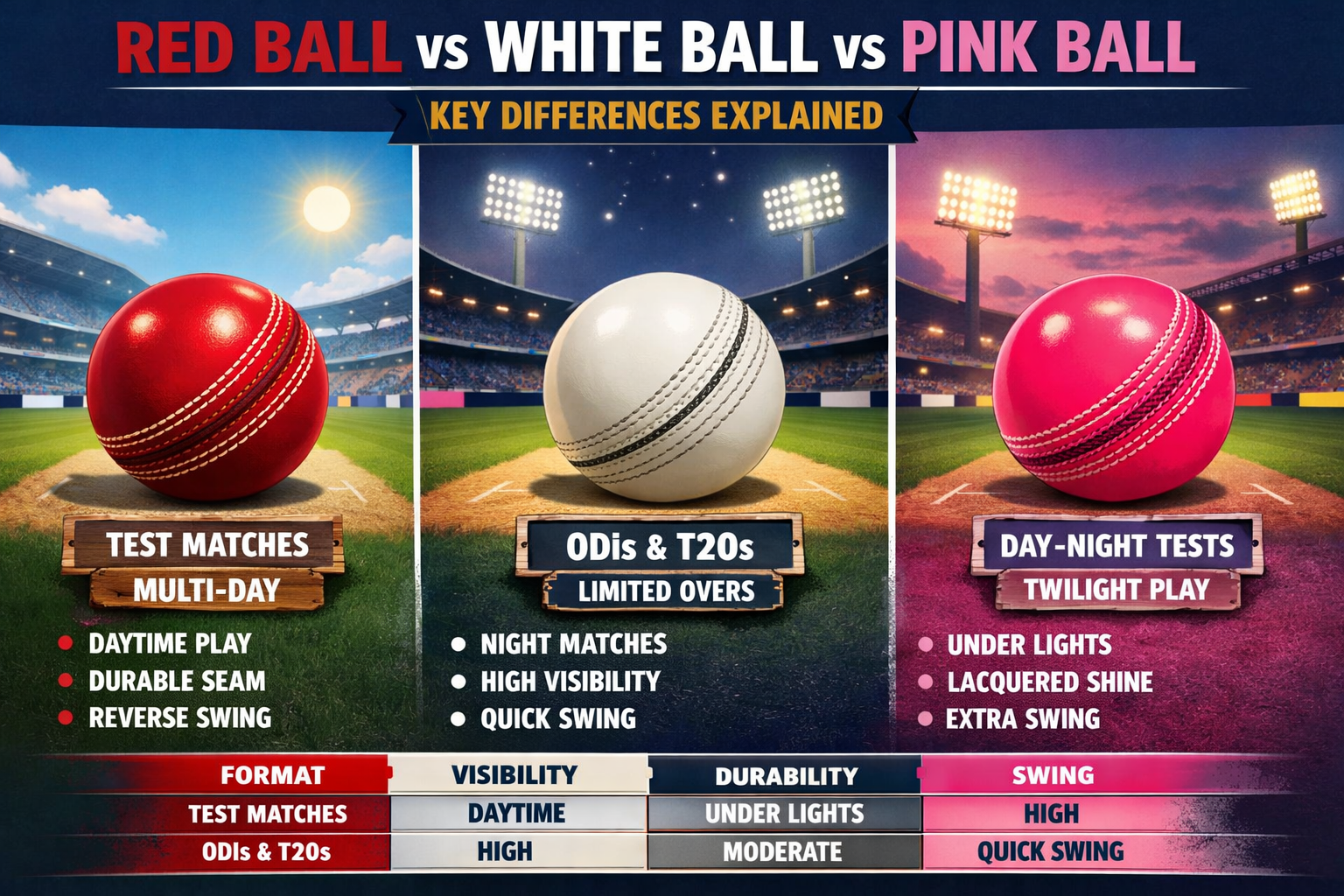
Red Ball vs White Ball vs Pink Ball: Key Differences Explained (USA Guide) 🇺🇸
Cricket is growing rapidly across the United States — from local leagues in Texas and California to international matches featuring USA national cricket team. One of the most common questions new American players ask is:
What’s the difference between red, white, and pink cricket balls?
Let’s break it down clearly so you can choose the right ball for your format, league, or practice session.
Red Cricket Ball – The Traditional Choice
The red ball is the original cricket ball used in longer formats of the game.
Where It’s Used:
-
Test matches
-
Multi-day domestic games
-
Traditional club cricket
Key Features:
-
Made from high-quality leather
-
Prominent stitched seam
-
Designed for durability over long innings
-
Swings and seams more naturally over time
Performance Characteristics:
-
Offers consistent seam movement
-
Reverse swing becomes possible as it ages
-
Better visibility in daylight conditions
In the USA, red balls are commonly used in longer-format league matches and serious hard-ball competitions.
White Cricket Ball – Built for Limited-Overs Cricket
The white ball was introduced for shorter formats and night matches.
Where It’s Used:
-
ODIs
-
T20 matches
-
Most American league games
-
Day-night games
Key Features:
-
Coated with extra lacquer for brightness
-
Slightly harder outer finish
-
Designed for high visibility under floodlights
Performance Characteristics:
-
Swings more in early overs
-
Loses shine faster than red ball
-
Less reverse swing later in innings
-
Can get softer quicker
Most T20 leagues across the U.S. prefer white balls because they are easier to see under lights and perfect for fast-paced matches.
Pink Cricket Ball – Designed for Day-Night Test Matches
The pink ball is the newest addition, created specifically for day-night longer-format games.
Where It’s Used:
-
Day-night Test matches
Famous examples include matches at the ICC World Test Championship Final (when scheduled as day-night) and international pink-ball Tests in Australia and India.
Key Features:
-
Extra layers of lacquer
-
Enhanced shine retention
-
Designed for visibility in twilight and under lights
Performance Characteristics:
-
Swings more under lights
-
Can behave differently in evening sessions
-
Retains hardness longer than white ball
Pink balls are less common in local U.S. leagues but are gaining popularity as cricket infrastructure expands.
Quick Comparison Table
| Feature | 🔴 Red Ball | ⚪ White Ball | 🩷 Pink Ball |
|---|---|---|---|
| Main Format | Test / Multi-day | ODI / T20 | Day-Night Test |
| Best Visibility | Daylight | Under Lights | Twilight & Lights |
| Durability | High | Moderate | High |
| Reverse Swing | Strong | Limited | Moderate |
| Popular in USA | Traditional leagues | T20 & club leagues | Rare but growing |
Which Ball Should You Use in the USA?
Choose Red Ball If:
-
You play longer format matches
-
Your league follows traditional rules
-
You want classic swing & seam development
Choose White Ball If:
-
You play T20 or 40-over games
-
Your matches are under lights
-
You prefer fast-paced cricket
Choose Pink Ball If:
-
Playing a day-night longer-format game
-
Your league specifically uses it
Final Thoughts for American Cricketers
As cricket continues expanding across the United States, understanding equipment differences helps you play smarter and perform better.
Whether you're a beginner joining a local club or an experienced player preparing for competitive tournaments, selecting the right ball impacts swing, seam, visibility, and match strategy.
If you're unsure which ball fits your league format, check your competition rules — or consult your trusted cricket gear supplier before purchasing.