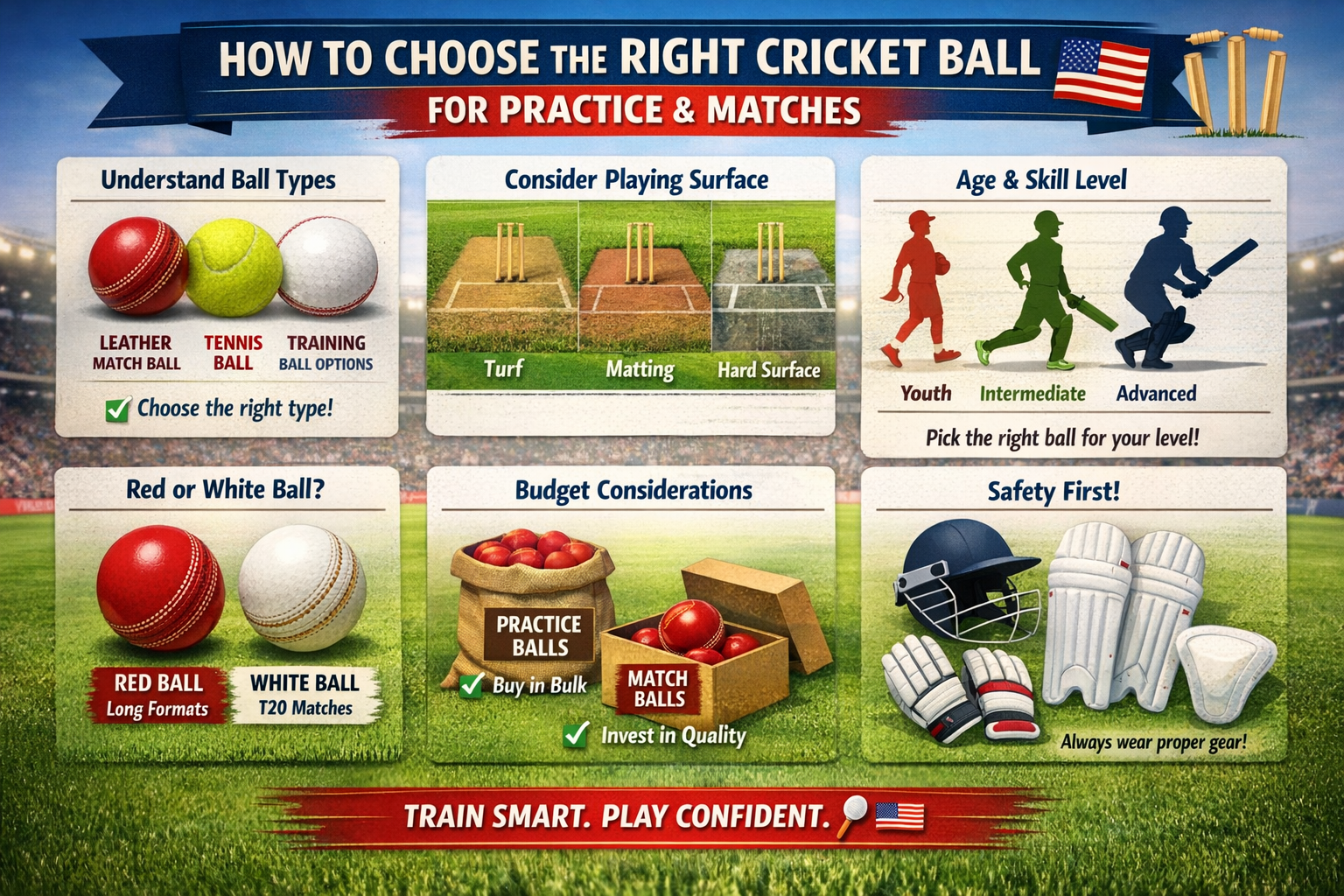
How to Choose the Right Cricket Ball for Practice & Matches (USA Guide)
Choosing the right cricket ball can dramatically impact your performance, skill development, and match results. Whether you're training in local leagues across the United States or preparing for competitive tournaments, selecting the proper ball for practice and match play is essential.
Here’s a complete USA-focused guide to help you make the right choice.
1. Understand the Different Types of Cricket Balls
Leather Cricket Balls (Match Balls)
Leather balls are used in official matches and high-level practice sessions. They provide authentic seam movement, swing, and bounce.
Popular brands used in competitive cricket include:
-
Kookaburra
-
Dukes
-
SG
Best for: League matches, tournament play, advanced training
Offers: Real match conditions, seam & swing development
Requires: Protective gear (helmet, pads, gloves)
In the USA, most competitive leagues use red leather balls for longer formats and white leather balls for T20 and limited-overs matches.
Tennis Cricket Balls
Tennis balls are lighter and softer than leather balls, making them ideal for beginners and casual play.
Best for: Backyard cricket, beginner practice, youth players
Safer for: Hard surfaces like parks and school grounds
Budget-friendly option
Some variations include wind balls (hard tennis balls) that simulate slightly faster pace.
Practice/Training Balls
These include:
-
Machine balls (for bowling machines)
-
Soft training balls
-
Incredi-balls for youth coaching
Perfect for academies and structured training sessions.
🇺🇸 2. Consider Where You’re Playing in the USA
Cricket in America is played on a mix of turf wickets, matting pitches, and artificial surfaces.
Turf Wickets
Use high-quality leather balls for realistic match preparation.
Matting Wickets
A slightly harder leather ball works better as matting surfaces can grip the seam differently.
Concrete or Hard Surfaces
Tennis balls or soft training balls are safer and more durable.
3. Choose Based on Age & Skill Level
Youth Players (Under 13)
-
Soft balls or tennis balls
-
Lightweight options for safety
Intermediate Players
-
2-piece leather balls for practice
-
Standard 4-piece leather balls for matches
Advanced/League Players
-
4-piece leather balls (match standard)
-
White balls for T20 competitions
4. Red vs White Cricket Balls
Red Ball
-
Used in longer formats
-
Better durability
-
Swings more traditionally
White Ball
-
Used in limited-overs cricket
-
Better visibility under lights
-
Slightly different lacquer finish
Most USA T20 leagues prefer white balls for better visibility during day-night games.
5. Budget Matters
If you’re buying for:
-
Team practice → Consider buying in bulk.
-
Personal net sessions → A lower-grade leather ball works well.
-
Official matches → Invest in premium match balls.
Quality matters, especially when preparing for competitive cricket in growing American leagues.
6. Safety First
When using leather balls, always ensure players wear:
-
Helmet
-
Batting gloves
-
Pads
-
Abdominal guard
Safety standards are especially important in youth cricket programs across the USA.
Final Thoughts
Choosing the right cricket ball depends on:
✔ Your playing level
✔ Surface type
✔ Format (T20 or longer formats)
✔ Budget
✔ Safety considerations
If you’re training seriously for league or tournament cricket in the United States, practicing with the same type of ball used in matches will significantly improve your performance.
Invest wisely, train smart, and play with confidence. 🇺🇸